

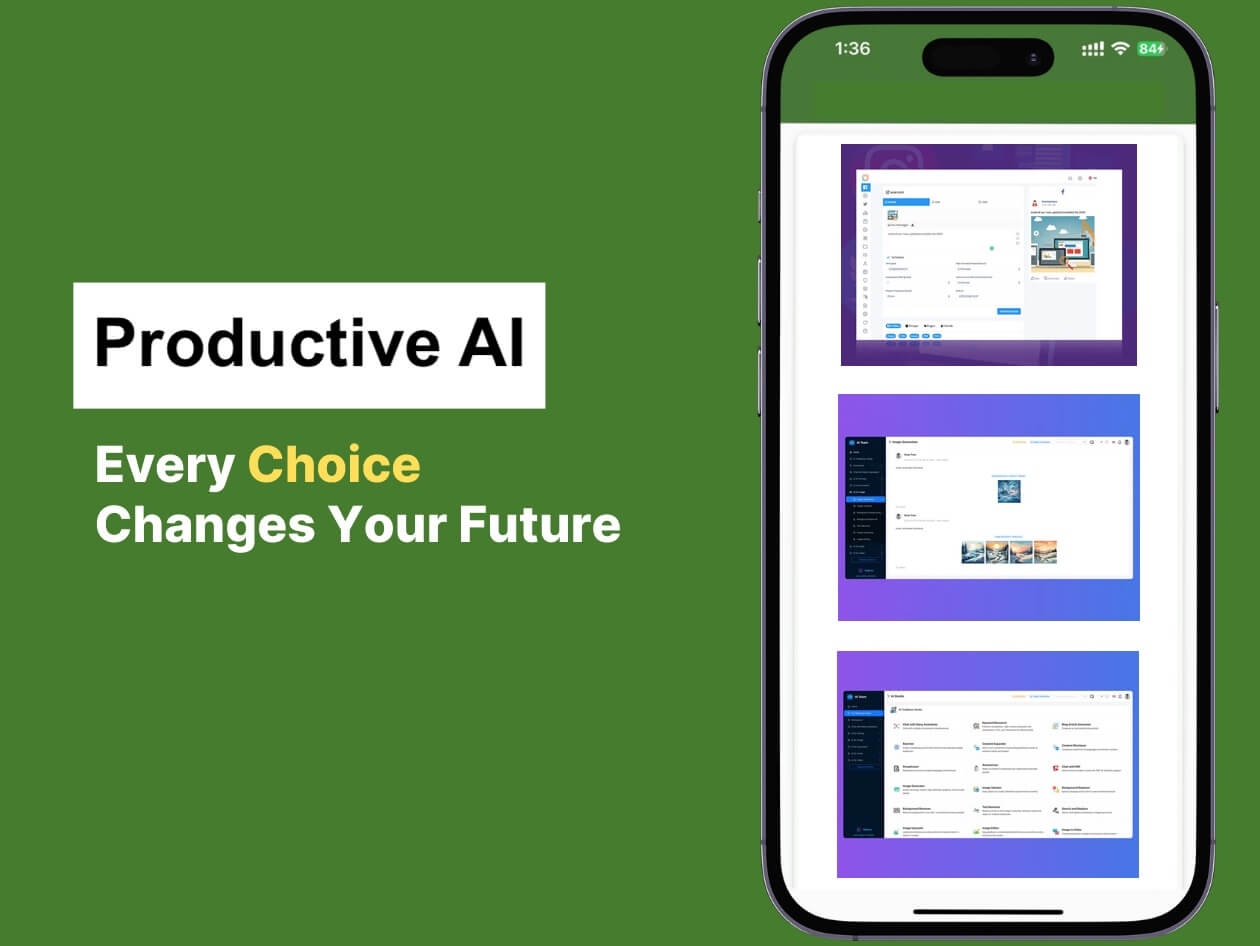
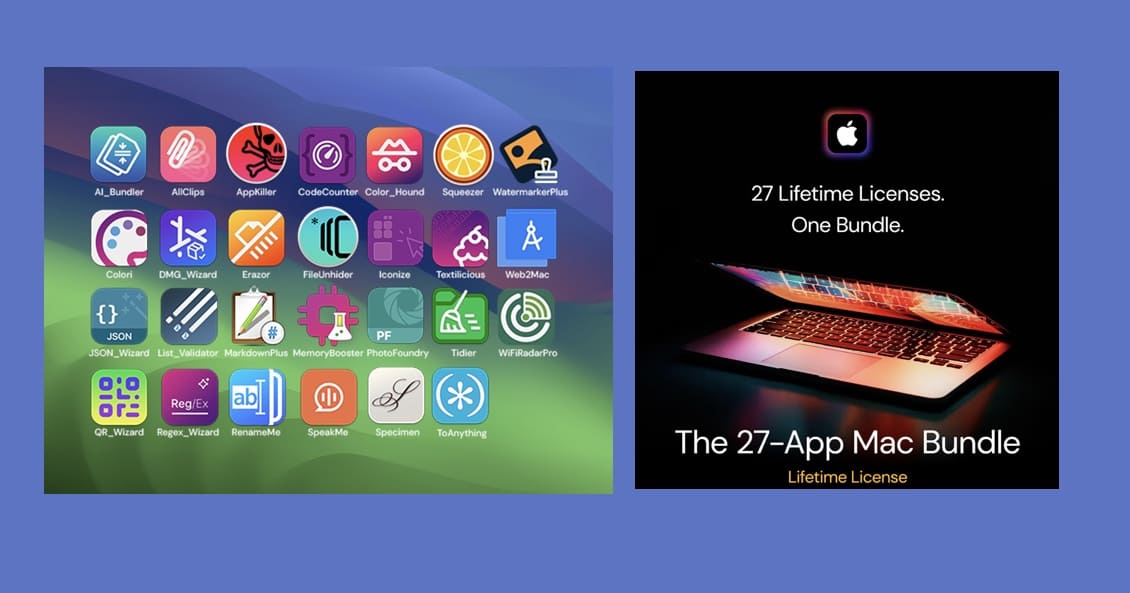
(October.14.2026) 50% Off Top 20 AI Productivity’s Lifetime Subscription. A lot of app comes with a lifetime subscription for work effectively.
The Benefits of AI Chat for Content Creation and Remote Work
SHAPE IDEAS
AI TOOLS FOR WORK EFFECTIVELY
- Top Best AI Tool for works
SUGGEST
MAKE IDEAS COME IN REAL
- Top Productivity’s AI
MAKE EASY
SUGGEST IN HELPS FOR WORK EASY
- Best Outcomes AI Tools Creation
When a collaborator is always ready to step in. Anyone involved in content creation knows the feeling: sitting before a blank screen with a blinking cursor, a looming deadline, and no concrete ideas taking shape. For freelancers, marketers, bloggers, online sellers, and remote office workers, this is a daily occurrence. Previously, the typical approach involved struggling alone, asking colleagues (if they were free), or spending hours scouring the internet for inspiration.
The advent of AI chat has transformed this workflow. It is far more than just a tool for answering questions; it acts as a conversational partner—listening to raw ideas, asking probing questions, suggesting directions, reviewing drafts, explaining complex concepts, and handling repetitive tasks so you can focus your energy on work that requires genuine critical thinking.
Here are the practical benefits of AI chat for creative and remote work: sparking ideas, structuring content, drafting, gathering feedback, and boosting daily productivity. We also outline a few principles for using this tool effectively and responsibly.
So Much Helps of AI Tools Can
The hardest part of any creative project is often the beginning. When the page is blank, the possibilities are endless, and that openness can be paralyzing. You might spend hours agonizing over an opening sentence, fearing it isn’t good enough.
AI chatbots solve this by lowering the “cost of starting.” You simply type a prompt like: “I need to write an introduction for a logo design service for small coffee shops; suggest five different angles.” Within seconds, you have five concrete directions to work with. Selecting, discarding, or combining these ideas is far easier than generating them from scratch.
This taps into a fundamental aspect of human cognition: we are better at critiquing than creating from a blank slate. When something is right in front of us, even if imperfect, our brains automatically begin comparing, editing, challenging, and refining it. An AI-generated first draft doesn’t need to be brilliant; it simply needs to exist so you have something to work with.
For daily content creators, cutting the time it takes to go from “nothing” to a “first draft”, from hours down to minutes, makes a massive difference. It also helps maintain a steady workflow, as you are less likely to get stuck at the initial stage.
Sharing ideas as if with a colleague
One of the greatest, and often underrated, benefits of AI chat is the ability to exchange ideas in a two-way dialogue. You don’t just receive output; you can actually converse.
Imagine you are working alone, without a team for brainstorming sessions. You have a vague idea: creating a series of short videos on personal finance for university students. You share this idea with the AI, and it might ask follow-up questions: Which year are the students in? Do you want a humorous or serious tone? Should each video address a specific issue, such as managing food expenses, saving for tuition, or avoiding consumer debt traps?
These questions force you to clarify your intentions, and the very process of answering often sharpens the idea itself. Many people find that simply articulating their thoughts to the AI helps them better understand their own ideas. It is the familiar “teaching others” effect, with the added advantage that your listener is always available, non-judgmental, and never tires.
AI also helps broaden your perspective. Everyone has their own mental patterns. By asking the AI to “look at this from the perspective of a demanding customer,” “consider how a competitor might approach this, ” or “suggest an idea that is the exact opposite of my current direction,” you gain insights you might not have otherwise considered. Not every suggestion will be usable, but if even one out of ten sparks a breakthrough, the conversation has been worthwhile.
Another practical factor is volume. Creativity is often a numbers game: to arrive at a few great ideas, you need to generate a large number of average ones. AI can generate twenty headlines, ten opening sentences, or five campaign concepts in a single prompt, and you can ask for “more,” “something different,” “something bolder,” or “something safer” until you find what you like.
Developing a Clear Outline and Structure
Many articles, videos, and presentations fail not because of a lack of ideas, but because of poor structure. Readers get lost, key points get buried, and arguments become disjointed. A good outline acts like a map, helping both the writer and the reader keep track of where they are.
AI chatbots excel at this stage. You can feed the AI a jumble of notes,disparate bullet points jotted down hastily during a meeting or when inspiration struck,and ask it to organize them into a logical outline. You can also ask it to propose various structural approaches for the same content: chronological, problem-solution, list-based, or narrative.
For instance, if you are preparing a blog post about remote work, the AI might suggest a structure that opens with a real-life scenario, outlines three main challenges, offers solutions for each, and concludes with a call to action. You can accept the suggestion, tweak it, or ask for a different approach. The outline thus becomes a collaborative effort rather than something you have to devise entirely on your own.
The practical benefit here is time savings. A solid outline ensures the writing process flows more smoothly because you always know what comes next. It also minimizes the need for major revisions later on,often the most time-consuming part of the creative process.
Drafting quickly to save time for what matters most
Once you have your ideas and outline, AI can assist with drafting the content. This is the most obvious benefit, yet it is also the most frequently misunderstood.
The effective approach isn’t to hand the entire writing task over to AI and publish the output verbatim. A better strategy is to treat AI as a drafter: it generates the initial version, while you act as the editor,infusing personal experience, adjusting the tone, and verifying information. This method saves a significant amount of time on the mechanical aspects of writing while ensuring your unique voice remains intact.
AI-assisted drafting is particularly useful for specific types of content. Examples include product descriptions for online stores,where you might need to write dozens of similar entries,as well as customer service or sales emails for common scenarios, social media posts across multiple platforms, short video scripts, and meeting summaries. These formats prioritize clarity and focus over flowery prose, playing directly to AI’s strengths.
Furthermore, AI helps you push past those stubborn “stuck” moments mid-draft. If you hit a wall,such as struggling with a transition or finding a more natural way to phrase something,you can ask the AI for suggestions. Sometimes, simply seeing three options is enough to spark a fourth idea of your own that surpasses the others.
Saving time at this stage isn’t about doing less work; it’s about redirecting your energy toward higher-value tasks: in-depth research, compelling storytelling, audience engagement, and strategic decisions that a machine simply cannot make for you.
Providing Feedback, Critiquing, and Improving Quality
Perhaps the most overlooked benefit is using an AI chatbot as a reader who offers feedback. Many creators work in isolation, lacking someone to review their drafts candidly and promptly. Friends might hesitate to offer criticism, colleagues are often busy, and you yourself may be too accustomed to your own writing to spot errors.
AI can fill this gap. You can paste your draft and ask specific questions:
Is the opening engaging enough? If not, why?
Are there any weak arguments or areas lacking evidence?
Are there parts that are wordy or repetitive and need trimming?
Is the tone consistent? Does any part sound too stiff or overly casual?
Would a first-time reader with no background knowledge understand it?
This feedback often pinpoints exactly the issues you had a vague sense of but couldn’t quite articulate. You can also ask the AI to adopt the persona of a specific type of reader,such as a busy marketing director, a recent graduate, or a skeptical customer,and provide feedback from that perspective. Testing out different “readers” helps you identify blind spots before your content reaches the actual audience.
Beyond providing feedback, AI assists with detailed editing: correcting spelling and grammar, improving sentence flow, condensing long paragraphs, or rewriting ideas in a different style. Crucially, you should remain the final decision-maker. Not every piece of AI feedback is correct, nor should every suggested edit necessarily be implemented. Treat the AI’s input as a valuable reference rather than a final verdict.
Quickly grasping and learning new concepts
Creative professionals and those working online often deal with a wide variety of topics. One day you might be writing about insurance, the next about technology, and the following week about nutrition. Researching each topic from scratch is incredibly time-consuming.
An AI chatbot acts as a patient explainer. You can ask it to break down complex concepts at the level that suits you best,such as “explain it like I’m a beginner,” “give me a real-life example,” or “compare these two concepts so I can see the difference.” If you don’t understand something, you can ask as many follow-up questions as you like without worrying about being a bother.
This is particularly useful when you need to quickly get up to speed on a subject before writing about it. You can ask the AI to outline the big picture, list key terms, highlight common misconceptions, or suggest questions worth exploring further. This helps you determine what to research next and allows you to ask the right questions when consulting experts or authoritative sources.
One important caveat: AI can sometimes confidently present incorrect or outdated information. Therefore, always cross-check data, quotes, proper names, legal regulations, and medical information against reliable sources. Use AI to gain a quick understanding and set your direction, but remember that verifying critical details remains your responsibility.
SHAPE IDEAS
AI TOOLS FOR WORK EFFECTIVELY
- Top Best AI Tool for works
SUGGEST
MAKE IDEAS COME IN REAL
- Top Productivity’s AI
MAKE EASY
SUGGEST IN HELPS FOR WORK EASY
- Best Outcomes AI Tools Creation
Repurposing Content Across Multiple Platforms
In the online landscape, high-quality content rarely appears just once. A single blog post can be transformed into a series of LinkedIn posts, a short video script, an email newsletter, photo captions, or a social media thread. Each platform has its own requirements regarding length, tone, and audience expectations, and manually adapting content can be labor-intensive.
AI chatbots are ideal for this task. You can provide the original content and issue specific prompts: “Summarize this into a 150-word LinkedIn post with a professional tone,” “turn this into a 60-second video script with a compelling hook,” or “write three different email subject lines for A/B testing.” Within minutes, you have a suite of multi-platform content derived from a single source.
This approach offers three key benefits. It expands your reach, as the same core idea connects with diverse audience segments. It ensures message consistency across channels. It saves significant time,especially for individuals or small businesses that lack a dedicated content team.
Of course, you should still review each version to ensure it fits the specific platform’s context. Content that performs well on one platform may not suit another, and you understand your audience better than any tool does.
Boosting Daily Online Productivity
Beyond just content creation in the narrow sense, AI chat serves as a versatile productivity tool for online work. Most of our workday isn’t defined by moments of peak creativity, but rather by a series of small tasks that consume time and mental energy.
Consider tasks like drafting polite, clear emails to clients or partners; summarizing lengthy documents, email threads, or meeting transcripts to grasp the key points; turning disorganized notes into neat reports or minutes; planning projects, listing action items, and prioritizing tasks; drafting scripts for frequently asked questions; or translating and editing text when working with international partners. Each task might take only a few minutes, but they can add up to hours over the course of a week.
Delegating these tasks to AI reduces your cognitive load,meaning you spend less mental effort on trivial details. This is more significant than it might appear. Everyone has a limited supply of focused energy, and every time you switch between tasks, you deplete some of that energy. By quickly handling repetitive tasks, you preserve your mental clarity for the decisions that truly require your attention.
For remote workers and freelancers, the benefits are even more pronounced. You often juggle multiple roles simultaneously,creator, salesperson, accountant, customer support representative, and project manager. AI chat acts as a versatile assistant; it doesn’t replace you, but it helps you accomplish more within the same timeframe and reduces feelings of overwhelm.
Personalizing Tone and Maintaining Consistency
A common concern is that AI-assisted content sounds generic and lacks personality. This concern is valid if you rely on vague prompts, but AI chatbots can actually help you establish and maintain a unique voice,provided you know how to guide them.
You can provide sample paragraphs you have written yourself and ask the AI to analyze your style,noting sentence length, formality, and the use of examples or data,and then instruct it to write in that exact style. For businesses, you can input brand guidelines regarding customer address, preferred vocabulary, and terms to avoid, ensuring consistency across all content.
This consistency is invaluable in the online landscape, where audiences encounter a brand across multiple channels and touchpoints. A steady tone fosters trust and recognizability. AI helps maintain this standard, even when multiple people are creating content or workloads surge.
Ultimately, you are the one who brings true personality to the work: your unique stories, perspectives, and real-world experiences. These are elements AI lacks and cannot authentically fabricate for you. Use AI to build the framework and gather material, then infuse it with the “soul” that only you can provide.
Guidelines for Using AI Chat Tools Effectively and Responsibly
To reap the benefits mentioned above, how you use the tool is just as important as the tool itself. Here are some practical guidelines:
Provide clear context. The quality of the response depends heavily on the quality of your prompt. Clearly state your purpose, target audience, desired length, tone, and any specific constraints. Compare “write an article about coffee” with “write a 600-word blog post for beginners making machine-brewed coffee at home; use a friendly tone and include three practical tips”,the difference is significant.
Engage in an iterative dialogue rather than expecting a perfect result on the first try. The initial draft is rarely flawless. View the conversation as a refinement process: ask for it to be “shorter,” “include real-world examples,” “use a less formal tone,” or “try a different approach for this unconvincing section.” The more specific your feedback, the closer the result will be to your vision.
Always verify critical information. AI can make mistakes or provide inaccurate data. Cross-check figures, quotes, and legal, medical, or financial information against reliable sources before publishing.
Retain decision-making power and your personal touch. Do not publish AI-generated text exactly as is. Read, edit, and infuse the content with your own experiences and perspectives. The best content combines machine speed with human insight.
Protect sensitive information. Avoid sharing personal data or confidential client or business information unless you fully understand the privacy policy of the tool you are using.
Be transparent when necessary. Depending on the context,such as academic settings, journalism, or platform regulations,you should disclose your use of AI assistance. Honesty helps maintain audience trust in the long run.
Use AI to enhance your capabilities, not to replace your own thinking. If you constantly rely on AI to do the thinking for you, your skills will gradually atrophy. Instead, use it to learn, experiment, and accelerate your progress, while continuing to hone your own judgment, linguistic intuition, and strategic thinking.
Collaboration, Not Replacement
When looking at what AI can do, the benefits of AI chat for content creation and online work boil down to three factors: speed, perspective, and companionship. Speed, because tasks that once took hours now take mere minutes. Perspective, because you can always gain new ideas, critical feedback, and fresh approaches. Companionship, because you no longer have to face a blank page, an unfinished draft, or a mountain of work all by yourself.
However, the greatest value emerges only when you view AI as a collaborative tool rather than a magic wand. It excels at sparking ideas, organizing information, drafting content, offering feedback, and handling repetitive tasks. It falls short in areas requiring lived experience, sensitivity to real-world context, and accountability for the final outcome,qualities unique to humans. Smart users know how to assign the right tasks to the right partner: let the machine handle the mechanics and capability expansion, while the human focuses on meaning, judgment, and emotion.
If you are new to this, start small. Try using AI to brainstorm headlines for your next article, ask for feedback on a paragraph you are unsure about, or summarize a lengthy document you haven’t had time to read. After a week, you will see for yourself which parts of your workflow benefit the most. From there, you can gradually expand, building habits and a library of prompts tailored to your own style.
In a world where content is increasingly dense and competitive, the winners aren’t necessarily those who do the most work, but those who work the smartest,leveraging tools to free up time and energy for what truly makes a difference. AI chat, when used correctly, is precisely one of those tools.
















Leave a Reply